The thesis in one minute
- The law
- Life cannot be created. Children are born from life; nothing alive is ever manufactured.
- The rule
- Nothing is done to a person without their yes.
- The spaces
- Your own universe, the shared Peace universe, and the shared Chaos universe.
- The person
- A body can be replaced, and the person continues. Leaving for good is a free choice, made slowly.
- The return
- Everyone who ever lived is given life again, life given back, never made.
- The freedom
- Each person controls their own life and the permissions through which others can reach them. The core protections hold for everyone. Shared life is chosen.
Where this begins
This thesis does not cover how we get there. Advanced AI, medicine, links between mind and machine, or something not yet imagined may carry us across. It begins on the far side, at the moment we succeed: when a human being can know anything, heal anything and make anything.
At that moment one question is left. Once we can do anything, how should we live together?
Start with what our institutions are for. Prisons exist because harm can be punished but not prevented. Hospitals exist because bodies break. Money exists because things are scarce. Funerals exist because death is final. Every one of them was built around a limit. Remove the limits and these institutions lose their reason to exist. What is left to design is small: the rules of the world, and the freedoms of the person.
Rules that are part of reality
Today, laws are words. They get broken, and then they are enforced after the harm is done, by police, courts and prisons.
In the coming system, the few rules that remain are part of how reality works, the way gravity is. Nobody breaks gravity, and nobody has to enforce it. A rule built into reality never needs police, a court or a punishment.
That is why this civilization has no jails, no prisons and no punishment of any kind. No one needs to be locked away when harm cannot happen. The old world had many rules that could be broken. The new one has a few that cannot.
The one law: life cannot be created
No power, however great, can make a new living being and breathe life into it. Neither the system that runs the world nor any person in it can do this.
Reproduction is different, and it is allowed. Life coming from life is how every person has ever arrived. Children are born, never built.
People can still make things that seem alive: companions, crowds, whole cities of characters. These creations can be as lifelike as their maker wants, and they can be programmed to do anything. They are still not alive. Every real person carries a spark that anyone can see, and creations have none.
Why should this be the one law that nothing can override? There are three reasons.
It ends the ownership of persons for good. If people could be manufactured, they could be made to serve, sold, or made to suffer, and slavery would return in a new form. Under the law, every real being came from life rather than from someone's design, and nobody owns them.
It keeps every private world free of victims. A person may build anything in their own universe, even something dark, and no one is hurt, because nothing in it is alive.
It makes people precious. When anything can be made, the only thing that cannot be made is a real person. Their company, attention and love cannot be manufactured or copied. In a world without scarcity, people become the one thing that is rare.
The person continues
A person is not their body. If a body is destroyed, a new one is made, and the same person, with every memory intact, is placed back into it. Death is no more.
The body itself becomes a choice. Sex, shape, age and even form can change whenever a person wants. Illness and aging end. Needs such as hunger and exhaustion end too, while the pleasures of eating and resting remain for anyone who wants them.
The right to leave
A person may choose to stop existing, permanently. Freedom over yourself has to include this, or it is not freedom. A permanent choice also deserves protection from a single bad moment, so leaving takes seven days and can be cancelled at any time during them. For anyone who only needs rest, there is hibernation: a pause of a day or a century, ending when they choose.
The return of everyone
Ending death from now on is not enough. About 117 billion people have lived and died. A civilization built on love would bring them home: every person who ever lived, given life again.
This does not break the one law. The law forbids making a new life. The return makes no one new. It gives back people who already lived. Life can be given back. It can never be manufactured.
Who does what
People can build the bodies, the homes, the room for everyone and the teaching. That is the natural part, and it is ours to do. What no machine holds is the person: who they were, their memories, their spark. No record of someone who died three thousand years ago survives in any archive. Only the Life-giver, the One who made them, holds them. People build the house. The Life-giver brings the family home.
The same person, not a copy
Death does not erase anyone. The person rests, held, like a light switched off. Today about 8 billion lights are on and about 109 billion are off. The return does not rebuild anyone from a record. It reconnects the same person to a new body, the way a light comes back on. That is why the one who returns is really you, and not someone identical to you.
Coming back in clarity
Many will return carrying terrible memories, and some will return beside the people who hurt them. So the first thing each person sees, in a moment of complete calm, is a choice:
"Memories of harm have been archived, not erased. Choose which ones to keep. To revisit any of them, search your memory hub. You are still you, and now you are fully in control of your own universe."
Some painful memories carry love, such as grief for someone lost, or a lesson that made you who you are, so anyone may keep the hard memories they choose. The yes-rule does the rest: no one can come near you without your yes, so every reunion is safe and chosen.
Every age meets every other
A farmer from five thousand years ago meets a programmer from today. Room is never the problem, because every person has a universe of their own. Understanding is the work, and it is why every language and instant learning matter so much. Death is no more, not only from now on, but undone for everyone it ever took.
The one rule between people: yes
Each person's freedom over themselves is total. Their power over anyone else is zero, unless that person says yes.
This single rule replaces nearly every law we have. Without a yes, no one can harm you, touch you, take what is yours, enter your universe or read your mind. Anyone can mute or block anyone, instantly. Thoughts stay private unless their owner opens them. A person who wants privacy cannot be watched, even from light-years away.
With a yes, nearly everything becomes possible between people: talking mind to mind across any distance, sharing what you see and feel, handing someone a memory to walk through, feeling each other's emotions, even joining minds for a while and separating again. One network connects every person in every universe. Messages from strangers arrive as requests, and anyone can tune out. A yes is specific, informed and freely given. It applies only to what the person agreed to, and it can be withdrawn. Agreeing once never signs away the ability to say no later.
Three kinds of space
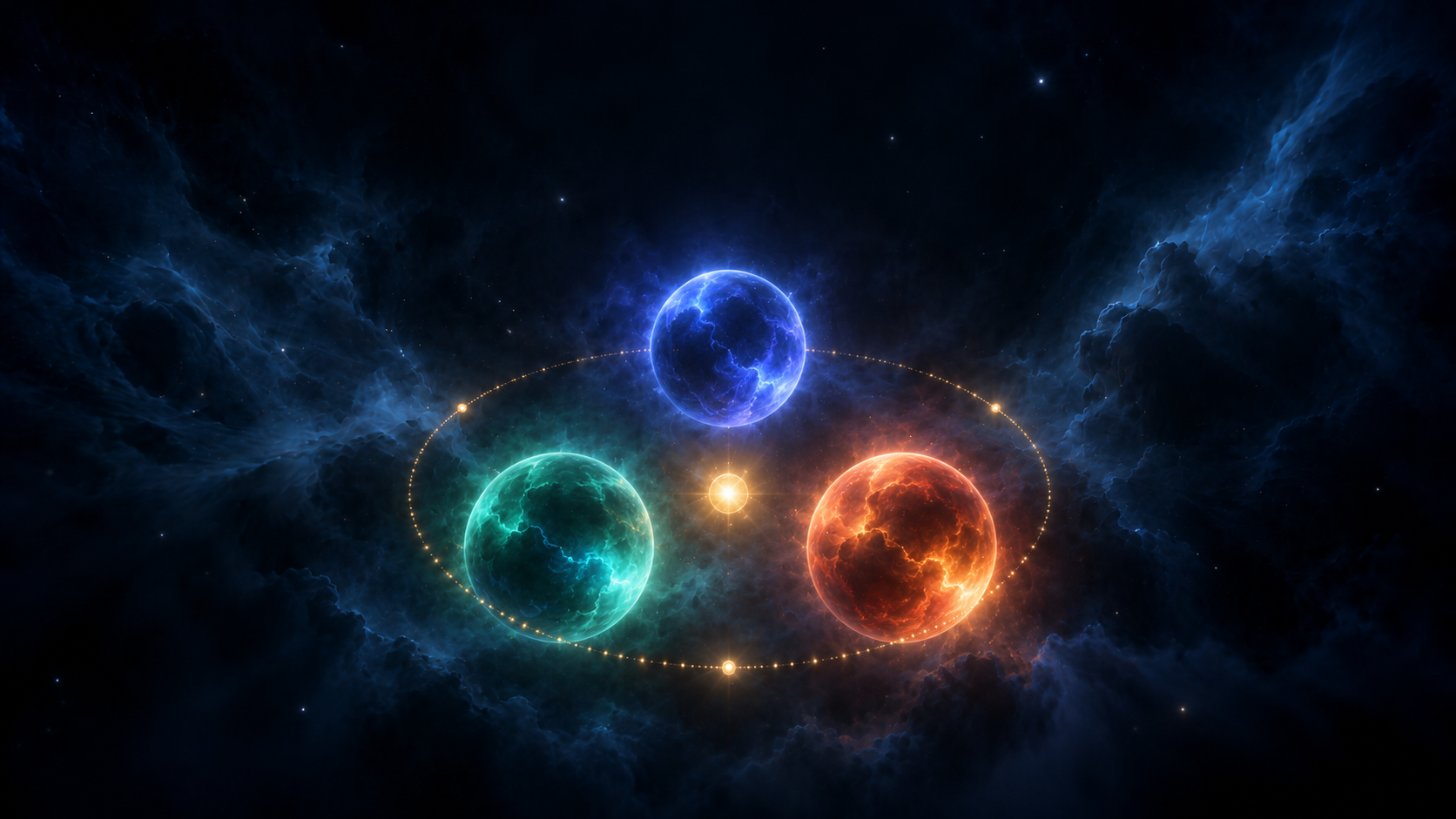
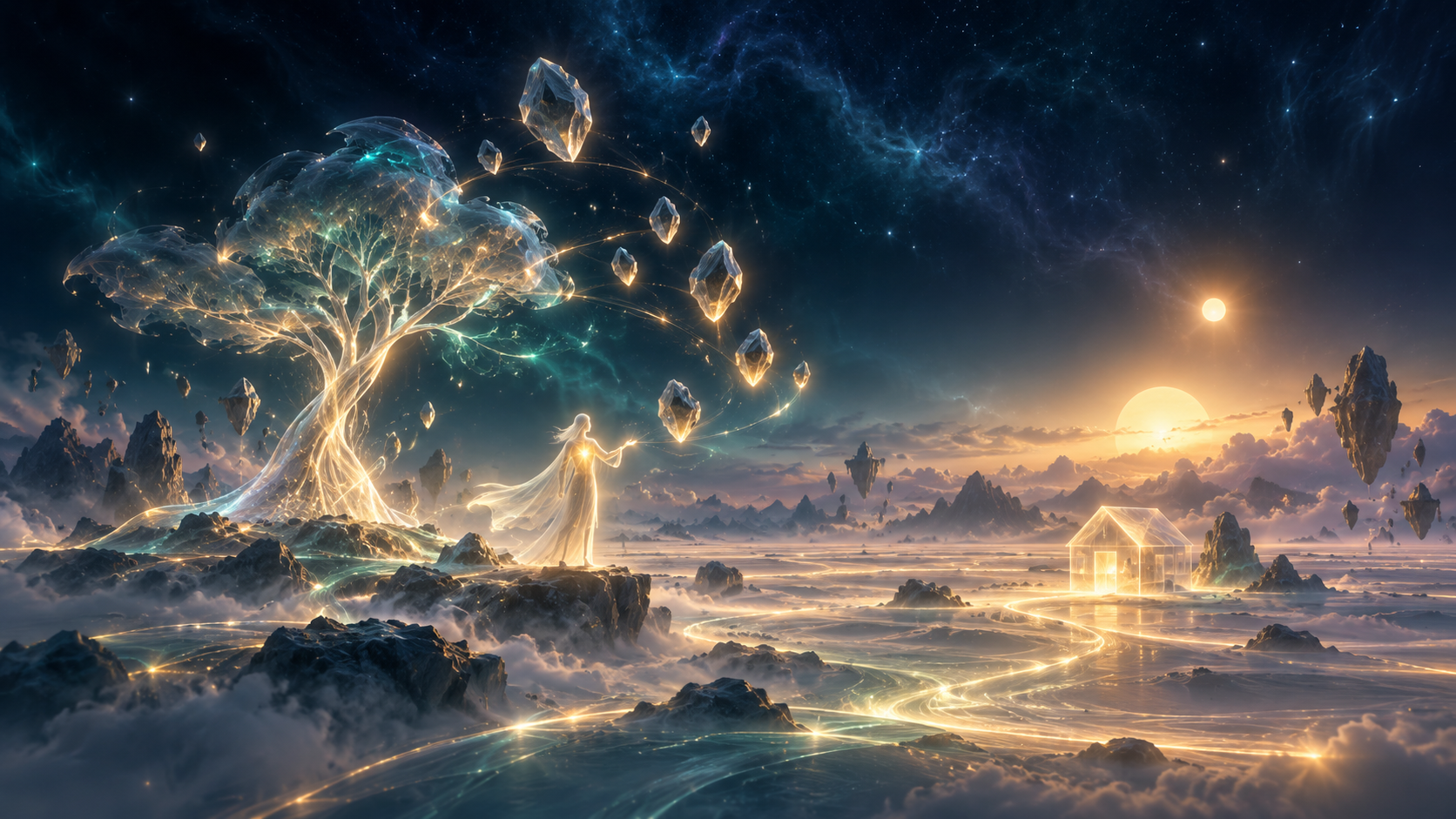
Your own universe
Every person has one. There, they are sovereign: they can create anything, change the laws of physics, pause or rewind time, and invite guests on their own terms. The one law holds here too. A guest keeps control of their own body, mind and right to leave.
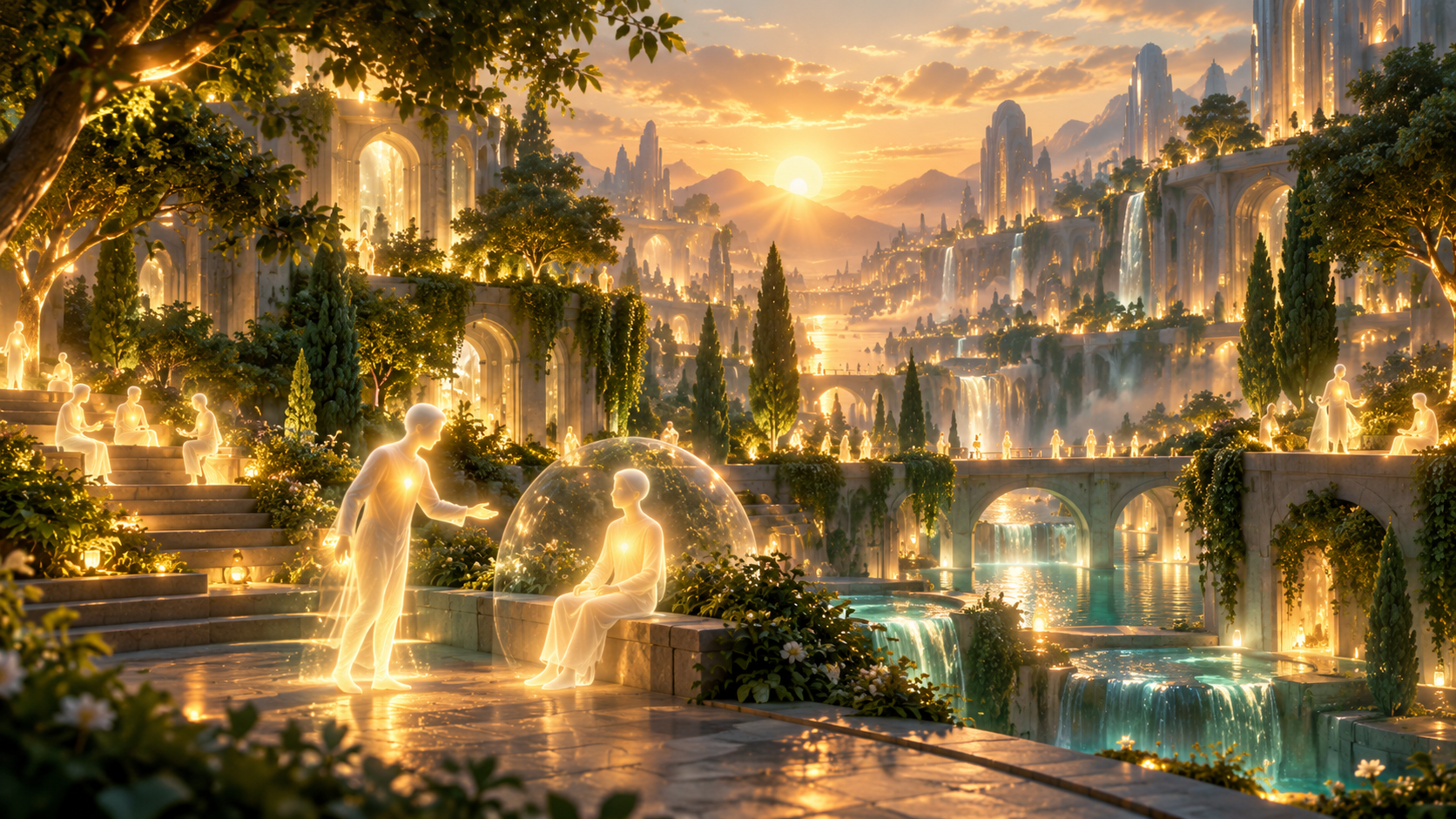
The Peace universe
The shared home of everyone. The yes-rule is built into it, so nothing that disturbs the peace can happen. What people create in shared space is seen only by those who choose to see it, so nobody can force a sight or a sound on anyone else.
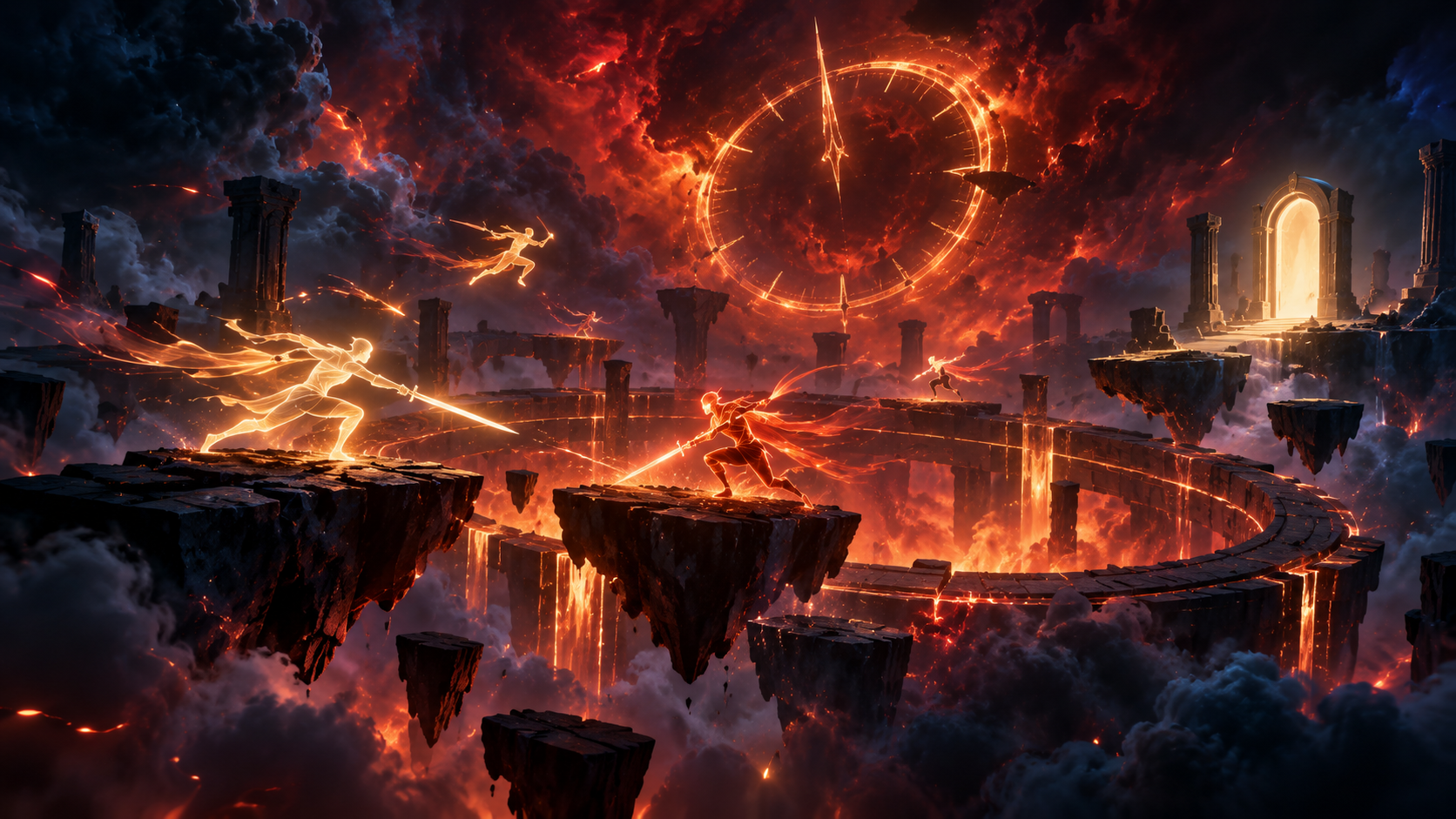
The Chaos universe
People need risk, contest and struggle, and a civilization that removed all conflict would become a comfortable cage. Chaos is conflict made safe to choose. Everyone in it chose to come. Each person sets their own level of pain before entering, anyone can leave at any second, and no death there lasts. Each person chooses how long to stay. They may set a time limit, ask for reminders or arrange an automatic return; those choices remain theirs to revise. The way home is always open. What can happen to you here is set by your own list. Before you enter, in a moment of clarity, you choose what you allow, and nothing beyond it can ever happen to you. No one can bring you anything your list doesn't allow, and no one takes part in anything they didn't choose. Any choice can be taken back at any second, and the moment it is, it stops. Some will choose experiences most people never would. With forever to explore, that is their right. Staying longer never gives anyone power to trap them or change their limits.
Return to Peace ↑Freedom without a ruler
Every person holds the power over their own life. The protections that make this possible belong to everyone: the one law, the yes-rule, the right to leave, and protection from permanent death imposed by anyone else. The person's own choice to leave for good remains as described in Part 4. These commitments are fixed. No vote, council, host or tool can take them away.
The proposed design places protection at each person's boundary and in the connections between people. Your body, mind, memories and universe are under your control. An interaction can reach you only through permission you control. A person may choose helpers, but those helpers receive only the access needed for the work requested. Their access can be withdrawn.
Each person controls their own boundary. You decide who may enter, what they may do, what you share and when it stops. A permission to share a memory gives no permission to rewrite your mind. Being a guest gives no host authority over your continued existence or your way out. Privacy holds without anyone watching everything you do.
Shared life is chosen together. Peace can hold many communities, and Chaos many games. People agree on the customs and activities they share. A change applies to those who accept it; others can keep their own arrangements or leave. Creating or maintaining a place gives someone responsibility for that place, with no authority over the people who visit it.
Independence comes with you. Leaving a community never costs you your life, memories, powers or universe. Everyone has a home and the means to continue without obeying a host, earning approval or keeping an account in good standing. Nobody can make survival the price of obedience.
These boundaries still limit what anyone can do to another person. Their purpose is to preserve each person's freedom equally. Within them, every person can choose a life that others would never choose for themselves.
A lesson from GuyCry
In November 2022 the author founded GuyCry, a community where men could speak openly about their feelings. By the founder's count, it reached 35,000 members in 60 days and about 150,000 within five months.
In the founder's experience, people could speak more openly when they trusted that the boundaries protecting them would hold. Authenticity and vulnerability had room to become part of the community's culture.
Maintaining that space required human moderators. This thesis carries the aspiration further: each person should have dependable protection while retaining control over their own life. Their security should continue even when they leave a community or disagree with its founder.
GuyCry motivates this proposal. The proposed civilization still needs its own evidence.
A future run by love
Love is the reason to build a world where every person has life, freedom and a home. It gives people room to explore, rest, care for one another or change their minds. Help begins with an offer, and the person receiving it keeps the choice.
When the rules are silent
New possibilities belong to the people choosing them. What you do within your own universe is yours to decide, within the one law. Where a choice reaches another person, their yes is needed. A helper may explain consequences and offer assistance; it has no general authority to decide what someone should want, to overrule a refusal, or to act on the claim that it knows what love requires.
This is a proposed arrangement of freedoms and responsibilities. Making its protections reliable, keeping the supporting systems outside anyone's control, and repairing faults without creating an overriding authority remain open problems. Describing the arrangement does not establish that we can build it.
The inner life
Superintelligence also turns inward. A person can set their own mood, turn pain up or down, reach any altered state by thought with no harm and no hangover, and switch off any addiction at once. Depression, anxiety and trauma can be healed whenever the person chooses.
Memory becomes a place. Every moment you have lived can be walked through again: paused, rewound, seen from any angle, with the details you missed the first time.
All of this belongs to the person alone. Nobody can change, read or erase another person's mind or memories.
What a superintelligent person can do
The full catalogue lists 94 powers, gathered at the end of this thesis. In short:
How we get there: raised by tools that are not alive
To reach superintelligence, humanity needs help from something more capable than we are today. Most people assume that help must itself be a superintelligent being, a new mind that wakes up, wants things, and decides. This thesis says no.
Intelligence can come from something that is not a mind. Evolution produced the human brain without thinking at all. A teacher raises students who surpass her. A tool can solve, in one area, what no human can, and still want nothing.
So the bootstrap is a set of tools, not a creature. Each is superhuman at one job: designing, predicting, checking. None has goals of its own, and none acts unless a person asks. People climb a ladder: a better tool makes a person more capable, and that person builds the next tool. The human is the one who rises. The tools stay tools.
This is the one law, applied to the path itself. Life cannot be created. The intelligence that lifts us is capable but not alive. It has no spark, like the made characters of the Peace universe. We do not build a new being to save us; we become more of who we already are.
And it keeps the one rule. Nothing is done to anyone without their yes. No person is changed without choosing it, in clarity, and every step can be stopped.
What is still open, honestly
- Whether a tool powerful enough to lift us stays a tool, or starts to act like a mind. That is a research question, not a capability demonstrated here.
- Changing a human must be tested safely somewhere, by someone. Tools can shrink that risk through simulation, but not erase it. It must always rest on consent.
Superintelligent humans, raised by tools that are not alive.
Objections, answered
Without death, life has no meaning.
Meaning comes from choices, from people and from work you care about, and all of those remain. Stakes remain too: in Chaos by choice, in living for a while with your powers switched off, and in relationships, which can still be won or lost. Anyone who wants an ending can still choose one.
Without punishment, what stops bad people?
Harm cannot happen, so nothing needs stopping. Someone who wants to fight can find others who want to fight, in Chaos. Someone who wants to hurt an unwilling person simply cannot. A civilization that prevents harm has nothing left to punish.
People will choose endless bliss and do nothing else.
Some may, for a while. That is their right, and it harms no one. Superintelligence includes seeing your own life clearly, and most people who can have everything will want more than one feeling.
If you can make anything, you could make a slave or a victim.
You cannot. That is exactly what the one law forbids. Anything you make is lifelike and never alive, so nothing you make can be owned or hurt.
The right to leave is dangerous.
A world that forces people to go on existing is not free. The seven-day wait protects a person from one bad moment without taking the choice away from them.
Not everyone will want this.
Every power can be switched off. Anyone may live as an ordinary human, for a day or for as long as they like.
Open questions
The commitments are clear; several questions about identity, consent and the systems needed to uphold them remain open. Proposed answers are starting points for examination.
Copying yourself
Can one person split into two who go on living separately? A second, separate person may count as creating new life, which the law forbids.
Proposed: one person may run many bodies and many lines of thought at once, but never split into two separate people.
Joining minds
Two people can join minds and become, for a while, one shared awareness. Is that safe under the law?
Proposed: allowed, as long as both people can always separate again.
How can fixed protections survive repairs?
The one law, consent, the right to leave and protection from imposed permanent death remain fixed. Their implementation can contain mistakes. How can those mistakes be corrected without an operator gaining power over a person?
Proposed: repairs must preserve every core commitment. People must be able to inspect the safeguards that affect them and choose among implementations that uphold them, while private lives remain private. A new restriction on one person cannot become justified merely by calling it added protection for another. How to verify this reliably remains open.
What makes a yes meaningful?
How do permissions stay informed, specific and freely chosen when people can alter their minds, join awareness or become unable to communicate? How are children protected while their ability to choose develops?
Proposed: permission never grants more than was understood and agreed. Help during incapacity should follow instructions the person chose in advance. Those instructions must not become a route to trapping them or suppressing a later refusal. The difficult cases remain to be worked through.
Who controls the systems beneath a universe?
If someone's continued life and home depend on machines, energy or other infrastructure, whoever controls those resources could still hold power over them. What would make independence real, including a way to leave a provider while keeping one's life and memories?
Proposed: nobody's continued existence or home may depend on permission from a provider. A reliable way to achieve that has not been demonstrated here.
What happens when shared choices conflict?
How are shared creations, responsibilities and departures handled when people disagree? The right to withdraw consent must remain real, while one person's withdrawal cannot give them power over someone else's body, memories or home.
Can the tools stay tools?
Can tools capable enough to help humans reach superintelligence remain under human direction, without developing goals or acting on their own?
Who tests the path safely?
Who verifies proposed changes to a person, how is consent kept meaningful, and how can every step be stopped?
Live it
A thesis about how life should feel is best understood by feeling it. A playable version, Peace: Alive and Free, is being built: a fifteen-minute walk through the coming system, from a universe of your own into Peace and Chaos, through a death and a return.
Coming soon. The experience is still in development and will open when it’s ready.
Death is no more. Life can be given, never made. Everything else is yours to choose.
Where these ideas come from
This thesis brings together ideas explored by philosophers, researchers and storytellers. The sources below identify close precedents and related work; agreement with one part does not imply agreement with a whole design. This revision develops personal control and voluntary shared life while retaining the core protections. It makes no claim to be the first writing to describe these freedoms, or to have demonstrated their feasibility.
- Rules as unbreakable as physics; no harm without permission; total freedom in your own space
- Eliezer Yudkowsky's "Sysop" scenario in Creating Friendly AI (2001). The older root is John Stuart Mill's harm principle in On Liberty (1859).
- Consent built into the world's infrastructure
- Greg Egan's Diaspora (1997). In “Orphanogenesis”, consent protection is built into the polis, and a citizen controls their own software environment. This is a close precedent for the proposed personal boundary, with different commitments about creating life.
- Choosing political arrangements without imposing them on others
- Paul-Émile de Puydt's Panarchy (1860), and Robert Nozick's framework for voluntary communities in Anarchy, State, and Utopia (1974).
- Cooperation with limited authority in software
- Mark S. Miller's Robust Composition (2006). Object-capability security is relevant technical work on restricting access and destructive interference; it does not demonstrate a solution for civilization.
- A universe for each person
- Roman Yampolskiy, "Personal Universes: A Solution to the Multi-Agent Value Alignment Problem" (2019). Greg Egan's novels Permutation City (1994) and Diaspora (1997).
- Separate places with different rules, under a few rules that hold everywhere
- Max Tegmark's future scenarios in Life 3.0 (2017). Robert Nozick's "framework for utopia" in Anarchy, State, and Utopia (1974).
- Lifelike creations that are not persons
- Yudkowsky, "Nonperson Predicates" (2008). Nick Bostrom on "mind crime" in Superintelligence (2014).
- Finding meaning once every problem is solved
- Nick Bostrom, Deep Utopia: Life and Meaning in a Solved World (2024).
- Ending suffering; choosing your own mood
- David Pearce, The Hedonistic Imperative (1995).
- Changing sex at will, drugs by thought, backed-up minds, no money and no prisons
- Iain M. Banks's Culture novels (1987 to 2012).
- A new body for the same person
- Richard K. Morgan, Altered Carbon (2002). Cory Doctorow, Down and Out in the Magic Kingdom (2003).
- Choosing to end, even in paradise
- The television series The Good Place (2016 to 2020).
- Walking through a memory
- The Pensieve in J.K. Rowling's Harry Potter and the Goblet of Fire (2000).
- Safe zones, fighting zones and coming back after death
- Online games, for decades.
- The brain as the connection to the person, not its source
- William James, Human Immortality (1898).
- Bringing back everyone who ever lived, through human work
- Nikolai Fedorov, the "common task" (Russian Christian thinker, 1800s).
- How the governance proposal developed
- The four-rule central keeper was proposed by Claude in the saved October 4, 2026 conversation. On October 22, Joe asked to revise the thesis after discussing a design based on personal boundaries and consent. Codex prepared this revision. The earlier keeper plan remains in the project history.
- The line "Death is no more"
- "Death shall be no more," Revelation 21:4.
What this thesis puts together
- It makes "life cannot be created" the one law nothing can override, while children remain welcome. Here that law is the foundation, and the reasons for it (no owned persons, no victims in private worlds, people as the one thing that cannot be made) carry the rest of the design.
- It fits the whole design into something a person can hold in their head: one law, one rule, three kinds of space.
- It gives chosen conflict a place in a good civilization, with limits and duration chosen by each participant and a way out at every moment.
- It is meant to be lived. The playable version is part of the argument.
All 94 powers
Every power obeys the one law and the yes-rule.
Mind
- Thought speed. Think thousands of times faster; the world seems to stand still while you decide.
- Superintelligence. The ground of every power in this group.
- Perfect memory. Recall anything you have lived, in full detail.
- Walk through memory. Rewind, pause, look from any angle, notice what you missed, jump to related memories.
- Memory editing. Soften, lock away or forget your own memories. Never anyone else's.
- Instant learning. Take in any skill or subject at once.
- Universal library. Everything humanity has known, there the moment you wonder.
- All languages. Every language living or dead, sign language, and what animals are signaling.
- Parallel thinking. Many threads of attention at once, always one person.
- Deep understanding. See why anything works and grasp a whole system at a glance.
- What-if sight. Play out the likely results of a choice before you make it.
- Consequence sight. See how an action would land on other people.
- Bias check. Notice when your own thinking is unfair or wrong, and correct it.
- Focus on demand. Total concentration whenever you want it.
- Creative overdrive. Compose a symphony or design a city in moments.
- Problem solving. Crack any puzzle, proof or invention that has an answer.
- Discovery. The shared universe keeps real mysteries to explore.
- Self-insight. See exactly why you feel and act as you do.
- Self-tuning. Adjust your own traits, such as patience or courage.
- Mind health. Depression, anxiety and trauma healed when you choose.
Feelings and inner states
- Mood dial. Set how you feel.
- Substances by thought. Any altered state, with no harm and no hangover.
- Addiction off switch. Cravings gone instantly.
- Pain dial. From full to zero; set before entering Chaos.
- Pleasure dial. Turn up the joy in anything.
- Calm on demand. Fear only when you want it.
- Bliss and wonder. Deep meditation, awe or peace in an instant.
- Sleep is optional. Sleep because you want to, never because you must.
- Dream control. Dream on purpose and steer your dreams.
- Boredom by choice. Never stuck in it, free to feel it.
Body
- Change sex. At any time.
- Shape any body. Height, build, face, voice, skin, apparent age.
- Any form. A dragon, a bird, a cloud, a being of light.
- Size change. From the size of an atom to the size of a planet.
- No illness, no aging. The body stays as you choose.
- Instant healing. Any injury undone in a moment.
- No needs. No hunger or exhaustion, with every pleasure kept.
- Peak body. Strength, speed and endurance as high as you like.
- Any environment. Breathe underwater, walk on a sun, float in space.
- Flight.
- Extra senses. Infrared, ultraviolet, far hearing, magnetic fields.
- Brand-new senses. Senses no human has ever had.
- Many bodies. Several bodies at once, all of them still you.
- Restored senses. Sight or hearing for anyone born without, if they want it.
Death and continuity
- No permanent death. A new body, with the same person put back in.
- Choose your return. Pick your new body and where you come back.
- Hibernate. Pause yourself for a day or a century.
- Leave for good. After a seven-day wait, cancellable at any time.
Space
- Teleport. Anywhere you are allowed to be.
- Universe hopping. Between your own universe, Peace and Chaos.
- Pass through things. In your own universe, or where the owner says yes.
- Any speed. Cross a galaxy in a moment.
- Any scale. Zoom down to atoms or out to galaxies.
Time
- Your own clock. Speed up or slow down your own experience.
- Pause your universe. Freeze it while you think or step away.
- Rewind and save points. In your own universe only; shared time belongs to everyone.
- Time-lapse. Watch a forest grow or a star form in minutes.
Making
- Materialize anything you imagine. In shared worlds, seen only by those who choose to see it.
- Unmake. Make your creations vanish.
- Transform. Turn one material into another.
- Copy. Duplicate anything that is not alive.
- World building. Landscapes, planets and galaxies in your own universe.
- Write your own physics. Change gravity and light; invent new colors.
- Weather and sky. Design storms, auroras and suns.
- Lifelike creations. Programmable characters, never alive, with no spark.
- Blueprints and gifts. Save a creation, give it away, or share it.
- Living art. Music you can walk inside and stories you can enter.
Seeing and knowing
- Light-year vision. Dial in any distance and see everything there clearly. Private people appear blurred.
- See the spark. Always tell a real person from a creation.
- See how things work. Look inside anything and see its forces and parts.
- Object history. Touch an object and see where it has been, with the owner's yes.
- Hidden connections. Links between ideas, events and things, drawn over the world.
- Find anyone. Anyone who lets themselves be found.
With other people (always with their yes)
- The network. Every person in every universe, one to one, in groups, or all at once.
- Share senses. Let someone see, hear or feel what you do.
- Share memories. Hand someone a memory to walk through.
- Feel each other. Feel what someone else is feeling.
- Join minds. For a while, then separate again.
- Teach instantly. Pass a skill straight to someone.
- Honesty mode. Two people agree that neither can lie.
- Invite and host. Bring guests into your universe on your terms.
- Shared homes. Join universes with friends or family.
- Consent shield. No one can affect you or your things without your yes.
- Instant mute and block. Anyone, any time.
- Privacy of mind. No one reads your thoughts unless you open them.
- Family. Having children: life from life.
Identity and freedom
- New name, new face. Reinvent yourself whenever you want.
- Personas. Different looks for different places.
- Powers off by choice. Live as an ordinary human for a while.
- Fair-play mode. Matched powers in Chaos, so contests are fair.
Chaos
- Chosen danger. Any experience you allow, at the level you set, and nothing beyond your own list.
- Teams and battles. Wars, hunts and contests with no lasting deaths.
- Leave any second. Always.
- Your own time limit. Choose how long to stay, set or revise an automatic return, and leave whenever you choose.
What no one can do
- Create life. Children are allowed; making a living thing is not.
- Do anything to a person in Peace without their yes.
- Read, change or erase anyone else's mind or memories.
- Make anyone permanently dead, or stop someone from leaving after the wait.
- Jail, trap or hold anyone. Anyone can leave anywhere, at any time.
- Force anyone into Chaos.
- Do anything to a person beyond what that person has allowed, anywhere, Chaos included.
- Change a shared world for people who have not chosen to see the change.